
20 BEST IDEAS FOR DECIDING ON SAFE LASER SITES
Safe Laser 1800: Compare It With The Safe Laser 500
Safe Laser devices are Class IV therapeutic cold lasers, often referred to as photobiomodulation (PBM) therapy systems. Through the emission of light wavelengths, which directly interact with mitochondria They are developed to decrease inflammation, improve tissue healing, and decrease the pain. Although the basic principle of the Safe Laser line of products is the same, there are significant distinctions between the models in terms of their power, appearance and scope. Safe Laser 1800 is high-power and the top model. Safe Laser 500 has an extremely durable, portable design that makes it more accessible. Understanding the essential aspects of these machines is vital for healthcare professionals to pick the right tool to meet their requirements regardless of whether it's the sports clinic with large volumes or for mobile therapy.
1. Laser Power Output & Dosage Time
Safe Laser 1800: The most powerful Safe Laser unit. It boasts a peak output power of 18 Watts (18,000 mW). This power is what makes it unique. Its high wattage permits a therapeutic dose of photons to be delivered in a short duration. The SL 1800 can perform procedures that require a device with a smaller power to complete in a matter of minutes. It is crucial for the efficacy of a clinical procedure, as it allows doctors to treat large or complicated areas quickly.
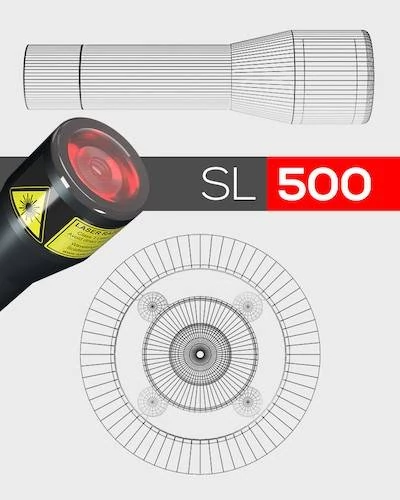
Safe Laser 500 (5000 mW) Safe Laser 500's maximum power is 5 Watts. Even though this is less amount of power than the 1800 however, the Safe Laser 500 is still considered high-power in the market for therapeutic lasers. It delivers a greater dose per unit of time, but the energy delivered is exactly the same as from the 1800's. It's an effective treatment but it requires more time.
2. Wavelength and depth of penetration
Both models utilize the same wavelength of 810nm. This infrared wavelength is chosen due to its exceptional tissue penetration capabilities. It has the ability to penetrate deep into the muscles joints, bones and. This allows it to be a highly effective treatment for various ailments, ranging from superficial tendonitis to deep joint osteoarthritis. Safe Laser is a system that uses one wavelength, which is highly effective for treating deep tissue. It is able to guarantee consistency in both the 500 model as well as the 1800 model.
3. Beam application and configuration
Safe Laser 1800 has a big, single-treatment head. The beam spreads so that it will cover a greater area (several centimeters in diameter) as the head comes into contact. This is the most effective method to treat massive muscle groups, areas of inflammation or when you want a general tissue impact over a larger field. It eliminates the need for precise, point-by-point application over vast areas.
Safe Laser 500: The cluster applicator is utilized in this model. It has an 810nm laser in the center that is similar to those that were used in the 1800s. However, it's surrounded by an adiode superluminous ring which emit visible red light at the wavelength of 660nm. The 660-nm wavelength of the laser is better absorbed by superficial tissues and can be utilized for treating wounds. The 500's method is a more "combined" treatment that targets multiple tissues simultaneously with the Cluster Head.
4. Energy Delivery and Dosage Calculation
Secure Laser 1800. Due to the power of the 1800, it provides energy in Joules/second at a rapid rate. The time required for treatment is crucial. The software of the device is developed to calculate the necessary exposure time in relation to the desired dose. The effectiveness of the device lies in its speed. It allows for the high dose protocol to be administered within an acceptable timeframe for clinical use.
Safe Laser 500: Energy delivery is slow. Dosimetry is typically integrated into the device. A contact sensor is typically present in numerous models. When placed on the skin, it will calculate how long the procedure will take based on selected power settings and the condition being treated. This guide is beneficial for patients who are brand new to laser treatment. It ensures that the dosage is correct and consistent.
5. Design, Portability, and Intended Use
Safe Laser 1800 – This is a console type device. It is a heavier, larger device, designed to serve as a workhorse to be used in stationary medical settings like the sports medicine clinic, veterinary hospital or an office for physiotherapy. The design prioritizes power and durability over portability for high-frequency usage.
The Laser 500 is safe. Laser 500 is very portable. This compact handheld device is approximately the same size of a large, electric shaving machine. The device is portable and light, making it ideal for athletes and therapists on the move who travel to competitions. It could also be employed in clinics where the device has to be transported from one room of treatment to another.
6. The Clinical Application and the Treatment Scope
The safe Laser 1800 is the most effective treatment option for chronic, deep-seated ailments and large areas. It is especially effective for treating joint issues of major importance (hip and knee joints, spinal), severe muscle trauma and those with a high BMI. It is the tool to use in the most challenging situations in high-volume environments.
Safe Laser 500: While effective for a wide array of conditions, its strength lies in treating localized, acute, and superficial-to-mid-depth issues. It's great for tendinitis (tendinitis) as well as bursitis (bursitis) and sprains as well as wound healing. It is especially effective for treating skin wounds, soft tissue injuries, as well as scar tissue.
7. Treatment Protocols and Versatility
Both models: Both operate by utilizing the principle of photobiomodulation and are suitable to similar medical conditions, including joint and musculoskeletal pain as well as inflammation and tissue healing. The distinctions aren't in "what," but in "how" speedy as well as "how far." The 1800 provides brute-force speed for tissues that are deep, whereas the 500 offers a versatile combination-wavelength approach that includes guided dosing in a highly portable format.
8. Efficiency and Practice Workflow
Safe Laser 180: This laser can provide incredible efficiency in a medical practice. If a patient can be treated in 5-10 minutes instead of 20-30 minutes, it will increase rate of treatment for patients. The time savings can translate into higher profits for the clinic and the ability to tackle more complex cases effectively during a typical appointment.
Secure Laser 500: Its procedure is more systematic. Treatments may take longer, which can limit the amount of patients you can treat within a single day. The system's portability and its automated features makes it suitable for a solo practitioner, or a situation in which time isn't an issue.
9. Investment and Cost-Benefit Analysis
Secure Laser 1800 is the flagship model and commands the highest price. Its high clinical efficiency, capacity to deal with the most difficult cases, and its position as a primary revenue-generating tool in a well-established clinic prove its return on investment.
Secure Laser 500: It is a more accessible entry point into the high-powered laser therapy. It's a less expensive option for mobile treatments or for new practitioners.
10. Models: How to Pick the Best One
Safe Laser 500 and 1800 are excellent instruments for a variety of applications.
You can choose to use the safe Laser 1800 if your clinic is a clinic, has many patients, you treat severe joint and spinal issues often, you work on huge animals or high-performance athletes and clinical efficacy is essential.
Safe Laser 500 is the ideal choice for those who are a mobile therapist, and require a device that can be easily transported. You may also choose this model to treat more serious wounds, injuries and superficial injuries.
In the end, they're both powerful tools that are made from the same scientific principles. However, each is optimized for a different clinical and operational scenario. Check out the top rated Safe Laser 500; for more info including safe laser 1800, lézerterápia budapest, lágylézeres készülék, b cure lágylézer, fizioterápia lézeres kezelés, safe laser 500 részletre, lágylézer ár, www safelaser hu, lágylézer terápia, safe laser ellenjavallat and more.
Top 10 Side Effects Associated With The Use Of Safe Laser Devices
While Safe Lasers are praised for their non-invasiveness and safety level, they can be powerful therapeutic devices that can interact with the human body's physiology. It is crucial to be aware of the potential adverse effects and contraindications of any medical procedure. Contraindications are situations in which the device should not be used due to potential danger, while adverse reactions are not intended, but not necessarily negative, reactions that can occur. A competent practitioner or consumer must be capable of distinguishing between situations requiring caution and normal physiological responses. This knowledge is essential to ensure responsible photobiomodulation.
1. Absolute Contraindications for Active Cancer and Malignancy
The primary reason to avoid laser therapy is direct application of energy to a metastasis, or cancerous tumor. The primary theoretical concern is that the effects of photobiomodulation–which boost cellular metabolism, proliferate and blood flow, could increase the growth of malignant cells, or cause metastasis. It is a complete prohibition. It is a complete prohibition.
2. Absolute Contraindication: Direct application to the Thyroid Gland
The thyroid gland reacts rapidly to various stimuli and has a very rapid metabolic rate. It is not recommended to use lasers directly to the cartilage of the thyroid in the neck. It is thought that the light energy can influence thyroid hormones or worsen thyroid conditions like Graves' or thyroiditis. Although the effects on the system from treating other body parts are thought to be negligible, targeted energy to the thyroid gland should be avoided completely.
3. Absolute contraindication to abdomen during Pregnancy
The Safe Laser should not be applied directly over a pregnant uterus. This is to ensure the safety of the fetus. Even though the light will only penetrate a few centimeters into the uterus and no harm has been established, the precautionary rule stipulates that non-essential energies not be applied to the developing fetus. This is a non-negotiable security precaution during the entire trimester of pregnancy.
4. Ocular Safety and the Risk of Retinal Damage
It is the danger that is most likely occur when improperly used. Safe Laser emits an 810nm wavelength that is invisible. The lens of eyes could project this wavelength onto the retina and cause chemical or thermal damage to the retina, before anyone realizes. The eye's exposure to the laser beam directly or from an object that reflect light should be avoided. The use of laser safety goggles which are specific to wavelengths for both the operator and patient is the most effective way to prevent this dangerous negative side result.
5. Relative contraindication: Photosensitizing medications
Photosensitivity is a typical adverse effect of some medications. Drugs such as certain antibiotics (e.g., tetracyclines), diuretics (e.g., hydrochlorothiazide), and some antipsychotics can cause this reaction. While the risk of a reaction caused by UV light is not as high, it is a relative contraindication. A thorough patient medication review is recommended as is an examination or treatment at lower dosages may be prudent before proceeding with full treatment.
6. The "Healing Crisis" or "Crisis of Repair"
A side effect that is often misunderstood by patients, is a temporary exacerbation after the initial treatment. This is a "healing crises" and is not a sign of damage, but the rapid activation of your body's repair and inflammation processes. As circulation increases and cell debris is eliminated there are some patients who experience a short-term increase in pain, stiffness and swelling. It usually goes away within 24-48 hours. Informing patients about this possible issue can prevent unnecessary anxiety and treatment discontinuation.
7. Hemorrhage and Coagulation Disorders are both relative contraindications
It is not advised to use the laser directly to an area with active bleeding or an acute hematoma of a significant size because of the vasodilatory effects of PBM which is triggered by the release of nitric oxide. It is possible that this will cause the bleeding to increase in the early stages. If you have a severe bleeding disorder (e.g. hemophilia), or are taking large doses of anticoagulant medications, it is important to consult your doctor before administering treatments.
8. Insufficient Sensation and over-treatment Risk
One of the unique aspects of Safe Laser therapy is the absence of thermal sensation when the treatment is applied correctly. The majority of the time, "no feeling" is reported as an adverse result. This could be an advantage of two. Patients may over-treat certain areas when they do not receive proper training and dose adhesion. Biphasic dose response can have negative therapeutic effects. Too much energy could also result in tissue irritation and fatigue.
9. Certain Patient Populations – Precautions
Certain populations require special consideration. The direct application of high-energy laser light over the epiphyseal plates (growth) within long bones isn't recommended for adolescents or children due to unknown consequences on bone growth. While the non-thermal characteristics of the laser pose a low level of risk to patients with pacemakers or other implantable electronic devices, it is advised to avoid applying the laser directly to the device generator. This will keep interference from electromagnetic sources.
10. Skin Reactions: Endogenous Photosensitivity
Genuine adverse reactions to the skin are extremely rare. The redness can be temporary in some people because of the increased flow of blood. This isn't a negative side effect but a normal and desired result. It is impossible to get an allergic reaction due to the radiation. As discussed in the context of drugs that cause photosensitization, certain conditions such as porphyria, lupus, and other endogenous conditions can cause increased sensitivity to different wavelengths. To be able to recognize these conditions and avoid or take precautions it is important to obtain a complete background of the patient. View the top rated érszukület for more tips including laser lézer, lézerkezelés térdre, safe laser 500, safe laser 1800 vélemények, orvosi lézer készülékek, safe laser 500 bérlés, nagyteljesítmény? lézer, safe laser 500 vélemények, lágylézer bérlés, lagylezer and more.
